
The City’s Fragile Economy
The Caves of SteelThe novel’s investigation repeatedly reveals how food, transit, energy, and social status bind New York City into an efficient but vulnerable system.
increasing Bearing strength in each event
 decreasing
Bearing strength in each eventdecreasingRationed Comfort

Rationed Comfort
Scarcity in ordinary life
Baley calculates how long his tobacco will last until the next quota day. Even a small pleasure depends on controlled supply and declining availability.
Status as daily difference
Food privileges, seating rights, and apartment facilities vary by civic rating. These small distinctions make social rank tangible without requiring money.
The City’s economy is experienced through what people may consume and where they may go.
Shared Kitchens
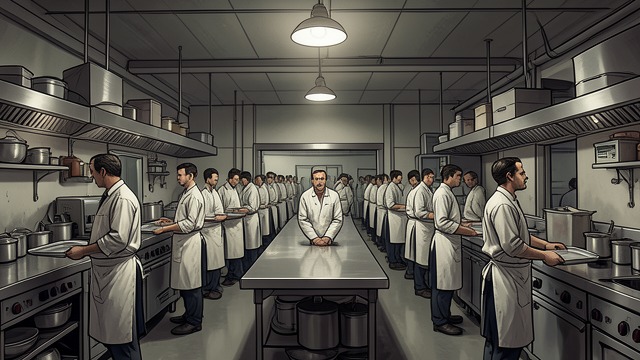
Shared Kitchens
Efficient feeding
Residents eat in large Community kitchens that coordinate food, ration tags, and seating. The system minimizes duplication and supports an immense population.
Friction behind efficiency
Special meal permits disrupt accounting and irritate kitchen staff. Baley knows the system works because people accept routine and public coordination.
A meal becomes a miniature of the City’s collective order.
Yeast as Lifeline
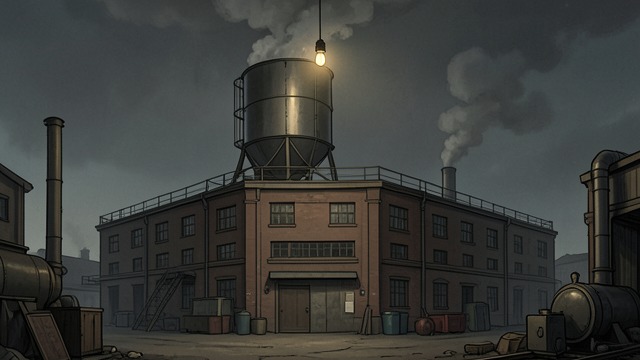
Yeast as Lifeline
An industrial foundation
Baley reflects that yeast provides most of Earth’s food and that Yeast-town supports enormous numbers of workers. Specialized cultures can substitute for familiar foods and industrial materials.
A dangerous dependence
The scale of the system means that a disruption could threaten millions. Baley begins to feel the vulnerability of a food economy he had previously treated as background.
The farm-and-factory landscape turns survival into a political fact.
Power and Waste
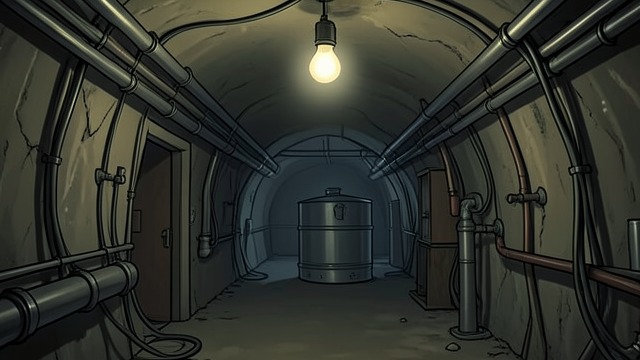
Power and Waste
Hidden infrastructure
The plant’s generators, radiation lines, and waste pipes sustain the City while remaining mostly invisible to ordinary residents. Baley feels awe and remembers his father’s former professional world.
A possible limit
He wonders what will happen when the radioactive waste caverns are full. The question mirrors broader doubts about whether endless growth can remain safe.
Infrastructure is both the source of comfort and a repository of deferred danger.
A System at the Edge
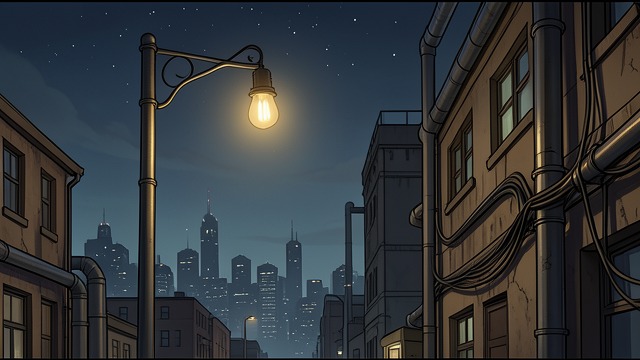
A System at the Edge
Efficiency without reserve
Fastolfe argues that New York depends on uninterrupted supplies of water, energy, raw materials, and air circulation. A failure that once meant inconvenience could now become fatal.
The colonization question
Baley resists the diagnosis but can no longer treat the City as self-sufficient. Emigration becomes a possible way to relieve population pressure and reduce dependence on one fragile system.
The economic argument makes the novel’s political choice concrete.
At the beginning, as Baley checks his tobacco
During Baley and Daneel’s first Department meal
During the journey to New York Yeast
During the escape through the power plant
During Fastolfe’s explanation of Earth’s future
